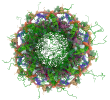
2.1. Ensemble information?
This entry consists of 0 distinct ensemble.
2.2. Representation ?
This entry has 1 representation(s).
| ID | Model(s) | Entity ID | Molecule name | Chain(s) [auth] | Total residues | Rigid segments | Flexible segments | Model coverage/ Starting model coverage (%) |
Scale |
|---|---|---|---|---|---|---|---|---|---|
| 1 | 1 | 1 | Gasdermin bGSDM | A | 234 | - | 1-234 |
100.00
/ 100.00 |
Atomic |
| B | |||||||||
| C | |||||||||
| D | |||||||||
| E | |||||||||
| F | |||||||||
| G | |||||||||
| H | |||||||||
| I | |||||||||
| J | |||||||||
| K | |||||||||
| L | |||||||||
| M | |||||||||
| N | |||||||||
| O | |||||||||
| P | |||||||||
| Q | |||||||||
| R | |||||||||
| S | |||||||||
| T | |||||||||
| U | |||||||||
| V | |||||||||
| W | |||||||||
| X | |||||||||
| Y | |||||||||
| Z | |||||||||
| AA [a] | |||||||||
| BA [b] | |||||||||
| CA [c] | |||||||||
| DA [d] | |||||||||
| EA [e] | |||||||||
| FA [f] | |||||||||
| GA [g] | |||||||||
| HA [h] | |||||||||
| IA [i] | |||||||||
| JA [j] | |||||||||
| KA [k] | |||||||||
| LA [l] | |||||||||
| MA [m] | |||||||||
| NA [n] | |||||||||
| OA [o] | |||||||||
| PA [p] | |||||||||
| QA [q] | |||||||||
| RA [r] | |||||||||
| SA [s] | |||||||||
| TA [t] | |||||||||
| UA [u] | |||||||||
| VA [v] | |||||||||
| WA [w] | |||||||||
| XA [x] | |||||||||
| YA [y] | |||||||||
| ZA [z] |
2.3. Datasets used for modeling ?
There are 2 unique datasets used to build the models in this entry.| ID | Dataset type | Database name | Data access code |
|---|---|---|---|
|
1
|
Experimental model
|
PDB
|
|
|
2
|
2DEM class average
|
Zenodo
|
2.4. Methodology and software?
This entry is a result of 1 distinct protocol.| Step number | Protocol ID | Method name | Method type | Method description | Number of computed models | Multi state modeling | Multi scale modeling |
|---|---|---|---|---|---|---|---|
|
1
|
1
|
Not available
|
Not available
|
To make the 52-mer pore model, protomer models (PDB 8SL0) were realigned using a custom script and a geometric model based on the number of protomers observed in the major 2D classes (52). Protomers were realigned to preserve the inter-subunit hydrogen bonding pattern observed in the slinky-like oligomer.
|
Not available
|
False
|
False
|
| ID | Software name | Software version | Software classification | Software location |
|---|---|---|---|---|
|
1
|
v3.9.7
|
model building
|
||
|
2
|
v2.4.2
|
model building
|